Cyber Shield: Complete Guide to Cyber Security Awareness & Protection in India (2026)
Learn how to protect yourself from cyber fraud, phishing, online scams, and social engineering attacks. Discover practical cyber safety tips and know what to do if you become a victim of cybercrime in India.
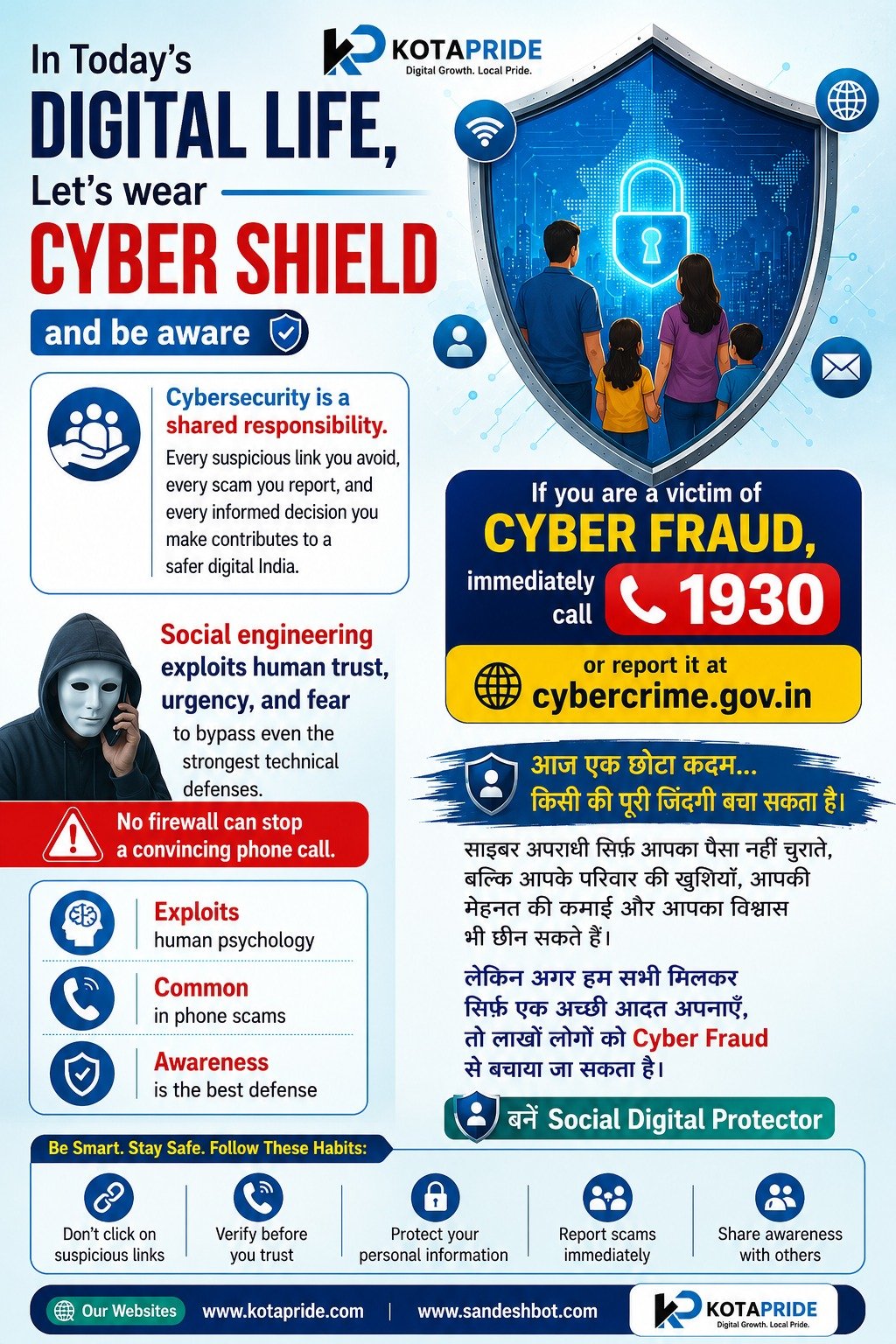
In Today’s Digital Life, Let’s Wear a Cyber Shield and Be Aware
The internet has transformed the way we live. From online banking and digital payments to shopping, education, healthcare, and social media, almost every aspect of our daily life depends on digital technology. While this digital revolution offers convenience and endless opportunities, it has also created new risks in the form of cybercrime.
Every day, thousands of people lose their hard-earned money to online fraudsters. Cybercriminals don’t always use advanced hacking tools. Instead, they often exploit human emotions such as trust, fear, urgency, curiosity, and greed. This method is known as Social Engineering.
The good news is that awareness is the strongest defense. By adopting a few smart habits, you can protect yourself, your family, and your business from becoming victims of cyber fraud.
What is Cyber Security?
Cyber Security is the practice of protecting computers, smartphones, networks, online accounts, and personal information from unauthorized access, cyber attacks, and digital fraud.
Cyber security is not just for IT professionals or businesses. Every internet user has a responsibility to stay informed and practice safe online behavior.
What is Social Engineering?
Social Engineering is a psychological manipulation technique used by cybercriminals to trick people into revealing confidential information or transferring money.
Instead of attacking computers, scammers attack human trust.
Common tactics include:
* Fake customer care calls
* OTP and banking scams
* Fake KYC verification
* QR Code payment fraud
* WhatsApp impersonation
* Job offer scams
* Investment and cryptocurrency fraud
* Lottery and prize scams
* Fake police or government officer calls
* Romance scams
No firewall can stop a convincing phone call. Awareness can.
Common Types of Cyber Frauds
Phishing Emails
Fraudulent emails pretending to be from banks, government departments, or trusted companies.
Smishing
Fake SMS messages asking users to click malicious links.
Vishing
Voice calls where fraudsters pretend to be bank officials or government authorities.
UPI Fraud
Scammers trick users into approving payment requests instead of receiving money.
QR Code Scam
Fake QR codes used to steal money.
Identity Theft
Criminals misuse personal documents and information.
Fake Investment Schemes
Promises of high returns through fake trading or cryptocurrency platforms.
Remote Access Apps
Scammers convince victims to install screen-sharing applications to steal banking information.
Warning Signs of Online Scams
Be cautious if someone:
* Creates urgency
* Requests OTP or PIN
* Asks for banking details
* Requests remote access to your phone
* Promises unrealistic returns
* Asks you to click suspicious links
* Claims your account will be blocked immediately
* Offers prizes you never entered
Simple Cyber Safety Tips
Never share:
OTP
ATM PIN
CVV
Passwords
Aadhaar details
Banking credentials
Always:
✔️ Enable Two-Factor Authentication (2FA)
✔️ Use strong passwords
✔️ Update your devices regularly
✔️ Verify phone numbers before trusting callers
✔️ Download apps only from official stores
✔️ Keep antivirus software updated
✔️ Lock your smartphone
✔️ Backup important data
✔️ Monitor your bank statements regularly
Cyber Security for Families
Parents should educate children about:
Safe social media usage
Stranger danger online
Privacy settings
Fake gaming rewards
Cyber bullying
Responsible internet behavior
Senior citizens should receive guidance about banking fraud, OTP scams, and fake customer care calls.
Cyber Security for Businesses
Every business should:
Train employees regularly
Use licensed software
Secure business emails
Enable multi-factor authentication
Backup business data
Restrict unauthorized access
Conduct regular cyber awareness sessions
Human error remains one of the biggest causes of cyber incidents.
What Should You Do If You Become a Victim?
If you suspect cyber fraud:
Stay calm.
Immediately call 1930.
Report the incident on the official Cyber Crime portal l . www.cybercrime.gov.in
Inform your bank immediately.
Block your cards if necessary.
Change passwords.
Save screenshots and evidence.
File a police complaint if required.
The faster you report, the greater the chances of recovering your money.
Cyber Security is Everyone’s Responsibility
Every suspicious link you avoid…
Every scam you report…
Every family member you educate…
Every secure password you create…
makes India safer.
Cyber security is not only about technology—it is about awareness, responsibility, and smart decision-making.
Become a Social Digital Protector.
Together, we can build a safer digital India.
Conclusion
Cyber criminals continuously invent new ways to deceive people, but they all rely on one thing: human trust.
Technology can protect systems, but awareness protects people.
Take a few minutes today to educate yourself and your loved ones. Share this article with friends, family, colleagues, and community members.
Today’s small step can save someone’s lifetime savings tomorrow.
Stay Alert. Stay Secure. Stay Protected.
Wear Your Cyber Shield.
Frequently Asked Questions (FAQs)
1. What is cyber security?
Cyber security is the protection of computers, mobile devices, networks, and personal information from cyber attacks and online fraud.
2. What is social engineering?
Social engineering is a technique where criminals manipulate people into revealing confidential information through trust, fear, urgency, or deception.
3. What should I do if I receive a suspicious call?
Never share OTPs, passwords, PINs, or banking information. Verify the caller independently before taking any action.
4. Is it safe to scan QR codes?
Only scan QR codes from trusted sources. Fraudsters often use fake QR codes to steal money.
5. Can banks ask for OTP or PIN?
No. Genuine banks never ask for your OTP, ATM PIN, CVV, or passwords over phone calls, emails, or messages.
6. What is phishing?
Phishing is a cyber attack where fake emails or websites trick users into revealing sensitive information.
7. How can I protect my online accounts?
Use strong passwords, enable Two-Factor Authentication (2FA), avoid suspicious links, and keep your software updated.
8. What should I do if I become a victim of cyber fraud?
Immediately call 1930, report the incident on the official Cyber Crime Portal, www.cybercrime.gov.in notify your bank, and preserve all evidence.
9. Why is cyber awareness important?
Most cyber attacks succeed because they exploit human behavior. Awareness helps people recognize scams before they become victims.
10. How can I help create a safer digital community?
Educate your family, report suspicious activities, verify information before sharing, and encourage responsible digital habits.
Contact Us
Address: 621, Mukesh Plaza, Near S.S. Dairy, Dadabari, Kota (Raj.)
Call/Whatsapp: 9828036274
Email: Online@kotapride.com
Website: www.kotapride.com, www.sandeshbot.com

